Posts

Showing posts with the label OOA

Use Case Diagram

Image
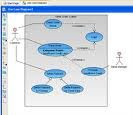
Well..these days, Object oriented Analysis and Design is more famous than Analysis Structure. we used to be really appreciate and enjoy using tools such as Data Flow diagram, (DFD), Data dictionary and others, the researcher who found them, really give us good science in "Computer Science". Talking about Use case Diagram we can think like using DFD in Analysis Structure, we use Use Case Diagram to know about System when we see from outside system (external world) and what should it have from the system. Use case diagram have at least three components such as actor, use case it self and association. Actor it can be a person or machine or device, let's say for Actor in the ATM system is at least Operator, Customer and Bank. Use case is the component key of the system, without Use Case, the system can not be run, for example Use Case Diagram for Simple ATM system is Use Case Turn On, when the machine turns on for the first time, so the ATM machine can connect to Database Ser...
UML No reason for Conventional paradigm!

Image
UML, well...I ofter here this word! But what is it for! I just know a bit, when I started lesson of software engineering in Institute of technology bandung (ITB). We can now realize that for the ones who before has already built applications using OOP (object oriented programming) such as Java, C++ or perhaps Visual basic.Net, now we can also built or documented using UML for creating Digram Use case, Sequent, Class diagram, activity, collaborations and others. Unified Modeling Language (UML) is a standardized general-purpose modeling language in the field of software engineering. The standard is managed, and was created by, the Object Management Group. The Unified Modeling Language (UML) is used to specify, visualize, modify, construct and document the artifacts of an object-oriented software intensive system under development. UML offers a standard way to visualize a system's architectural blueprints, including elements such as actors, business processes, (logical) components, ac...